
By continuing to use this site, you agree to our use of cookies.
Moving To Hawaii

Nov 6, 2026
In:
Are you ready for life in Hawaii?
Beaches and year-round warm weather are a big draw for people moving to Hawaii. But despite being part of the United States, the Aloha State is an overseas destination. That means more planning than a typical out-of-state move.
By choosing U-Pack® to ship your belongings, you can focus on the fun, like preparing to live the dream in one of the world’s top tropical vacation destinations.
Follow this guide to learn more about life on the Islands.
Overview of the Hawaiian Islands
Surrounded by the Pacific Ocean, Hawaii is the only U.S. state that is an island. It’s actually an archipelago of 137 volcanic islands that form 8 main landmasses.
Two of the main islands, Niihau (The Forbidden Isle) and Kahoolawe (The Target Isle), are not available for new residents. Niihau is privately owned and available only to descendants of the Sinclair family and their guests or to U.S. government officials. Kahoolawe was a bombing test site during World War II. Now, it is a sanctuary and nature preserve used for native Hawaiian spiritual rituals.
Here are some facts about the 6 other islands:

Rainbow Falls on the Big Island of Hawaii
Hawaii (The Big Island)
- It’s the second-most populous island, with around 210,000 residents
- Almost one-quarter of the residents live in Hilo, the most prominent town and county seat
- It’s home to 4 active volcanoes and another just off the coast, submerged in the water
- The west coast Kailua-Kona community is known for breathtaking beaches
- Attractions include Akaka Falls, Hawaii Volcanoes National Park and Panaewa Rainforest Zoo
- The key industries are agriculture (coffee, macadamia nuts and tropical fruits) and tourism

The Kilauea Lighthouse on the island of Kauai, Hawaii
Kauai (The Garden Isle)
- The island is home to just over 73,000 people
- Avocados, bananas, coffee, guavas, mangos, papayas, pineapples and sugarcane are grown on the island.
- Attractions include Alakai Wilderness Area, Kokee State Park and NouNou Mountain (Sleeping Giant)
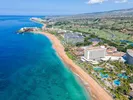
Kaanapali Beach in Maui, Hawaii
Maui (The Valley Isle)
- The population is around 168,000 residents
- Maui is the second-largest Hawaiian Island in land mass, but only the third-largest in population
- The financial and commercial hub of Maui is the 28,000-person community of Kahului
- There is one active volcano on the island
- With over 3 million visitors annually, tourism is the most popular business
- Attractions include Haleakala Crater, Hookipa Beach Park and Maui Ocean Center
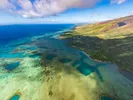
Coral reef on the coast of Molokai, Hawaii
Molokai (The Friendly Isle)
- There are around 7,400 residents
- The economy is centered around cattle ranching and farming (pineapple and sugarcane)
- George Murphy Beach Park, Kakahaia National Wildlife Refuge, Forest Reserve and Palaau State Park are notable attractions on the island

Kapolei on the west coast of Oahu, Hawaii
Oahu (The Gathering Place)
- Home to the state capital of Honolulu, Oahu is the most populous island, with around 989,000 residents
- It’s the third-largest Hawaiian Island by landmass
- The island is the most popular tourist destination
- Attractions include the Honolulu Museum of Art, Pearl Harbor National Memorial, and Waikiki Beach
What to know about Hawaiian culture before moving there
A key part of Hawaiian culture is the Aloha Spirit, which embraces love, compassion and peace. Kindness, unity and harmony with people and nature are key elements and respecting those will help you acclimate.
Native language
Understanding some Native Hawaiian phrases will help show respect for the people. Here are several to know:
- Aloha: hello, goodbye, love, compassion
- Kai: sea or ocean
- Mahalo: thank you
- Mālama: to care for or preserve
- Mana: spiritual energy
- ʻOhana: family
Sacred land and rituals
Land and nature are sacred in Hawaii. Respect the natural elements by keeping them clean. Rituals, including the hula dance, honor the land and the Islands’ history.
Paranormal legends and haunting happenings
The Islands have multiple paranormal legends. Iolani Palace is rumored to be haunted by monarch spirits. Legends like the Night Marchers of Kauai and Oahu and the Legend of Pele are also prominent. Many of the stories contain reminders of respecting nature.
Daily life in Hawaii is different than in the Mainland
Living on a tropical island differs from residing in the continental U.S. Know what to expect before arriving.
Climate and geography
The state's tropical climate is warm, with sporadic rain showers. Typical year-round temperatures range from 65 to 85 degrees.
The Islands can be affected by tropical storms, wildfires and volcanic eruptions, so having an emergency plan is essential. There are 6 active volcanoes in the state, located on or near the Big Island and Maui.
Employment
The tourism job market is healthy, but opportunities in other sectors might be limited depending on where you live.
With the rise of remote work during the past few years, many people have chosen to telecommute from Hawaii to enjoy the tropical location. If you’re considering remote work, be aware of the time difference. The state follows Hawaii-Aleutian Standard Time (HST) and doesn’t observe Daylight Saving Time.
Making a military move? Learn more about PCSing to a Hawaiian military base.
Cost of living
Hawaii is more expensive than most other states, and the housing market is highly competitive.
Because of the Islands’ isolated location, shopping works differently. Be prepared for longer wait times when shopping online, since goods from outside the state must be flown or shipped in. Prices for groceries, fuel and home goods are typically higher than on the mainland.
Daily commutes and out-of-state travel
Roads can be winding to navigate natural terrain, so driving between two communities can take longer than expected. While public transportation is available in the larger communities of Hilo, Honolulu and Kona, it’s uncommon in other towns.
Regional flights or ferries can help you get from one Hawaiian Island to another, but traveling to the mainland requires more planning. The shortest flight to the mainland (California) takes 5-6 hours.
Education
Most areas of Hawaii have access to public, private and homeschool options for kids. If you have children, you’ll want to consider the local schools when buying or renting a home.
The University of Hawaii (8 campuses), Brigham Young University and Hawaii Pacific University serve the state’s adult learners.
Logistics of relocating to Hawaii from the Mainland
Moving overseas takes a bit more planning than other state-to-state moves. You can’t drive your car or a rental truck to Paradise of the Pacific.
Personal travel
Most people who move to Hawaii fly there, although some cruises depart from California and sail to the Islands. Book your travel early and consider the flight duration (or sailing duration if you elect to go by ship).
Shipping household goods to Hawaii
You’ll need a moving service like U-Pack to ship your belongings to the Islands. Our ReloCube moving containers are perfect for the task. You can order as many as you think you might need and will only pay for the ones you use.
Transporting a car, motorcycle or scooter to the Islands
U-Pack equipment is not designed to move cars. We recommend Mr. Car Shipper® to transport a vehicle. Call 877-528-9627 to get a quote.
However, U-Pack can ship motorcycles, scooters, ATVs and lawn mowers inside the ReloCube (as long as the fuel is drained).
Bringing your pets
Pets can’t travel in the moving equipment, so they’ll travel on the plane or boat with you. Contact your airline or cruise line for specific rules and regulations.
The state requires proper health certificates for importing animals. Check our guide for moving pets to Hawaii for more information.
Moving houseplants
Live vegetation is not allowed in U-Pack containers. Follow the State of Hawaii Plant Industry Division guidelines for shipping plants to your new home.
U-Pack can help you relocate to the Aloha State
Most U-Pack quotes are instant, but moves to Hawaii are more complex and require a moving consultant’s review. Speak directly to a moving consultant by calling 844-362-5303844-594-3077 or start your quote online and provide an email address so we can get back to you with a price once we’ve checked all the details.
Keep in mind that Hawaii moving costs can be more expensive than moves within the continental U.S., but U-Pack is usually one of the cheapest ways to get your belongings there.
We’re ready to help with your move to or from Hawaii. Let us know in the comments if you have questions about moving with U-Pack.
More articles you might like...